The Difference Is in the Details: How We Finish Joinery Properly
- Apr 16
- 3 min read

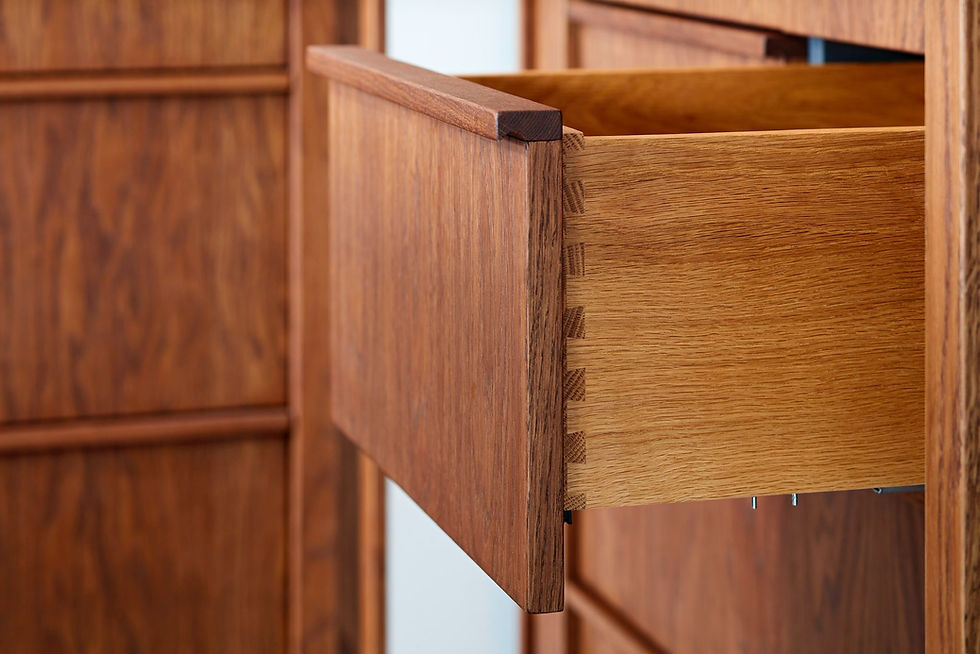
Most people notice colour first. We notice the edges.
Because in joinery refinishing, it’s not the topcoat that defines the result — it’s
everything that happens before it.
A finish can look right from a distance. Up close, the details tell a different story.

Where Refinishing Often Falls Short
Not through lack of effort — but through lack of time.
Edges are softened through over-sanding. Profiles lose definition under heavy coatings. Primer is applied too quickly, or not built up properly. Dust and environment aren’t fully controlled.
None of this is immediately obvious. But as light moves across the surface, the inconsistencies appear.

Edges, Profiles, and Paint Build
This is where a finish either holds up — or starts to fail.
Edges should remain crisp. Profiles should stay defined. Coatings should sit on the surface — not fill or soften it.
That only happens when preparation is controlled.
Not rushed sanding. Not heavy coats to “cover”. But a measured approach — building the finish gradually, and refining it between stages.
The difference is often measured in millimetres. Along an edge. Around a profile. In how the light catches the surface.

Flat Surfaces Are Straightforward — Transitions Aren’t
A flat panel is easy to get right.
The transition into a profile isn’t.
This is where you see inconsistency —where coatings build unevenly, or edges lose their sharpness.
A considered finish carries evenly across both. No visible build-up. No drop-off. Just consistency.

Complex Joinery Requires Time
Decorative pieces expose everything.
Intricate mouldings, carvings, and layered details don’t allow shortcuts. They highlight them.
These aren’t sprayed once and left. They’re built up gradually — primed, sanded back, and refined between coats.
Each stage is there to preserve the detail, not bury it.

A Controlled Process
Every piece we refinish follows a structured approach:
Fully degreased before any sanding
Carefully prepared — including hand sanding where required
Coated with a high-adhesion primer system, built in layers
Sanded between coats to control build and consistency
Spray finished within a controlled workshop environment
Allowed to cure properly before handling and reinstall
It’s not about adding more product. It’s about controlling how it’s applied.

Why It Matters
Good refinishing shouldn’t draw attention to itself.
It should feel considered. Consistent across every surface. And hold up over time — not just on day one.
Edges remain sharp. Profiles stay defined. The finish settles naturally into the space.
The Detail Most People Miss
From a distance, most finishes look similar.
Up close, the difference is clear.
The work is in the preparation —particularly around edges and profiles, where time is either spent or skipped.

In Practice
Most of what we do isn’t immediately visible.
It’s in the sanding between coats. The restraint in how finishes are built up. The time spent preserving the original detail.
The result isn’t a finish that stands out —it’s one that sits quietly, exactly as it should.

For projects where detail matters, everything begins with a conversation.
we’ll take a closer look and advise on the best approach. Want to see more? You can view our previous projects here.

Comments