Best Kitchen Colours for 2026 — And How to Choose What Works
- Apr 10
- 2 min read
Kitchen colour trends change every year, but the most successful kitchens aren’t trend-led. They’re considered in context — shaped by light, materials, and how the space is used.

Moving away from flat white
High-gloss white kitchens are gradually being replaced by softer, more tonal palettes.
Popular directions include:
Warm neutrals (stone, clay, off-white)
Muted greens and greys
Deep, grounding tones for islands
These colours tend to sit more comfortably within a space, rather than dominating it.
Two-tone continues to lead

Two-tone kitchens remain one of the most effective ways to introduce depth.
Typically:
Lighter tones on perimeter cabinetry
Darker, more grounded tones on islands
This approach works particularly well in open-plan spaces, helping to define different zones without structural changes.
Colour should respond to materials
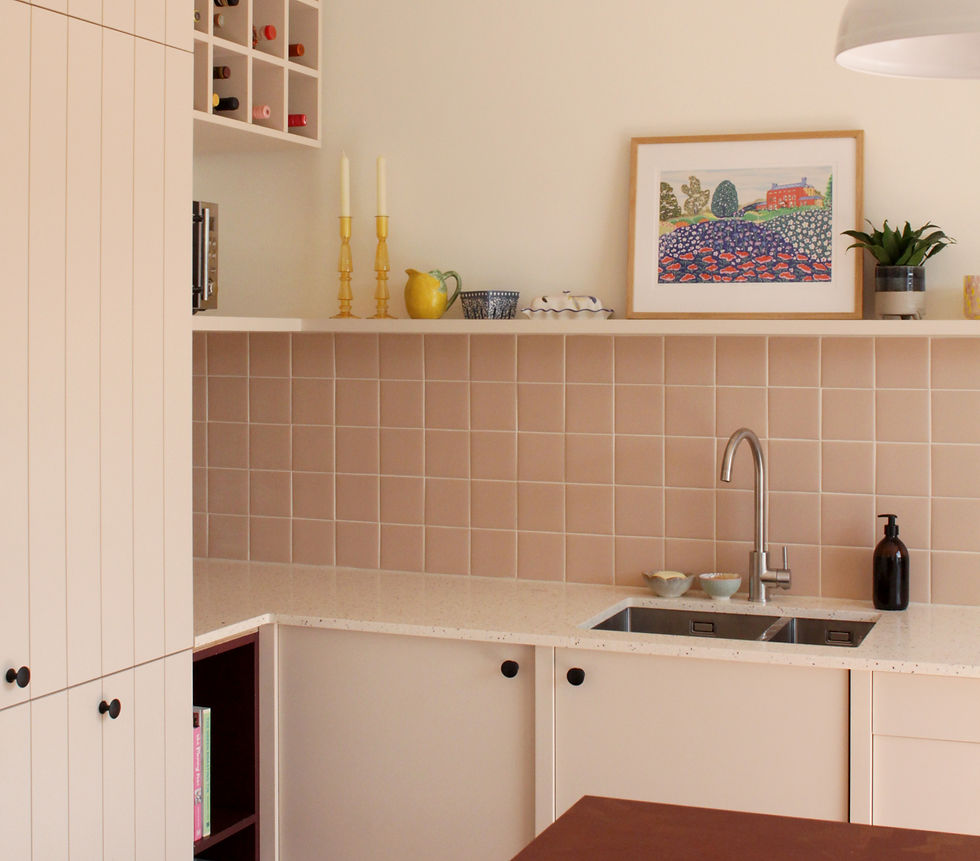
The most important factor isn’t the colour itself — it’s how it works with what’s already there.
Consider:
Flooring (warm vs cool tones)
Worktops (veining, contrast, reflectivity)
Natural light
A colour that works beautifully in one kitchen can feel completely different in another.
Sheen matters more than people expect
A low sheen (around 10–20%) tends to create a more refined, architectural finish.
Higher sheens can feel harsher, particularly under strong lighting.
Choosing with confidence
The best way to commit to a colour is to see it in the right material, with the right finish.
This is why we always spray sample boards in the exact coatings used for the final project — allowing you to see how the colour behaves in your own space before moving forward. You can learn more about our Design-led process and Colour Consultations here.


Comments