Why Proper Surface Preparation Matters Before Spraying Kitchens & Joinery
- Feb 5
- 3 min read
Updated: Mar 23

Most people think a kitchen respray is simply about colour.
In reality, the finish is only as good as the surface beneath it. The smooth, refined look people love comes from hours of careful preparation before a single coat is sprayed. Without the right process, even high-quality coatings can fail — leading to peeling, uneven texture, or a finish that simply doesn’t last.
At Bespoke Spray Studio, preparation isn’t just one stage of the work. It’s the foundation of everything we do.
Working With Solid Timber Requires Care
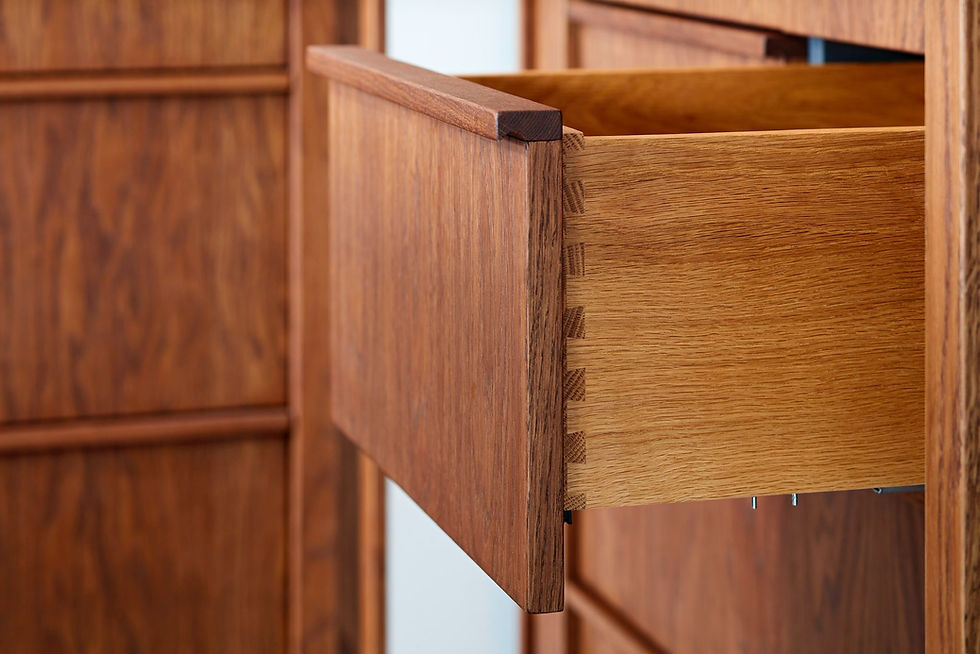
Solid timber cabinetry is beautiful, durable and well worth preserving — but it isn’t a flat, lifeless material. Wood moves, breathes and carries years of natural oils, waxes and everyday contaminants that can interfere with adhesion if not handled properly.
Before any spraying takes place, surfaces must be carefully prepared to create a stable base for the new finish. This includes:
Deep cleaning and degreasing to remove built-up oils and polishes
Careful sanding to create a properly keyed surface
Repairing dents, chips and wear so the final finish looks refined
Isolating knots and tannins that can bleed through coatings over time
Skipping these stages might save time, but it often leads to staining, peeling or a finish that feels rough rather than calm and consistent.
Preparation is what allows a sprayed finish to look architectural and intentional, rather than obviously “painted”.

Why a Dust-Free Environment Makes All the Difference
Dust is one of the biggest challenges when spraying.
In a normal home or garage environment, tiny airborne particles settle onto wet coatings. These particles create small imperfections in the surface, often called “nibs”, which catch the light and interrupt what should be a smooth, even finish.
A dedicated spray booth allows us to work in a controlled environment with filtered air and managed airflow. This significantly reduces airborne contamination while coatings are being applied.
The result is a calmer, more consistent surface — the kind of finish people instinctively run their hands over, without finding texture or grit.
It’s one of the key reasons a workshop-based process produces a more refined result than a quick, on-site approach.

Temperature Control and Proper Curing
Spray coatings don’t just “dry” — they cure.
Curing is a chemical process that determines how hard, durable and long-lasting the finish will be. If temperatures are too low, coatings can remain soft or mark easily. If conditions are too damp, you risk blooming, poor adhesion or an inconsistent sheen.
By allowing cabinetry to cure in a temperature-controlled environment, we give each coat the conditions it needs to harden properly. This improves:
Surface durability
Resistance to everyday wear and knocks
Long-term stability of the finish
This stage often goes unseen, but it plays a major role in how a kitchen looks and performs years after it’s been refinished.
The Finish You See Is Built on Work You Don’t
A beautiful sprayed finish doesn’t come from the final coat alone.
It comes from the sanding you don’t see, the repairs you don’t notice, the dust you never find, and the curing time that ensures longevity. These quieter stages of the process are what transform a colour change into a considered, lasting improvement.
Without proper preparation and controlled conditions, even the best products can only achieve so much.
A Studio Process, Not a Quick Cosmetic Change
Because of the level of preparation, environmental control and curing time involved, refinishing is not a fast cosmetic process. It’s a carefully managed studio craft designed to create a finish that feels calm, considered and built to last.
If you have a well-made kitchen or joinery worth preserving, this level of care makes all the difference.

Comments